
Introduction
In a world driven by convenience and mass production, very few brands manage to turn tradition into a thriving business.
P-TAL did exactly that.
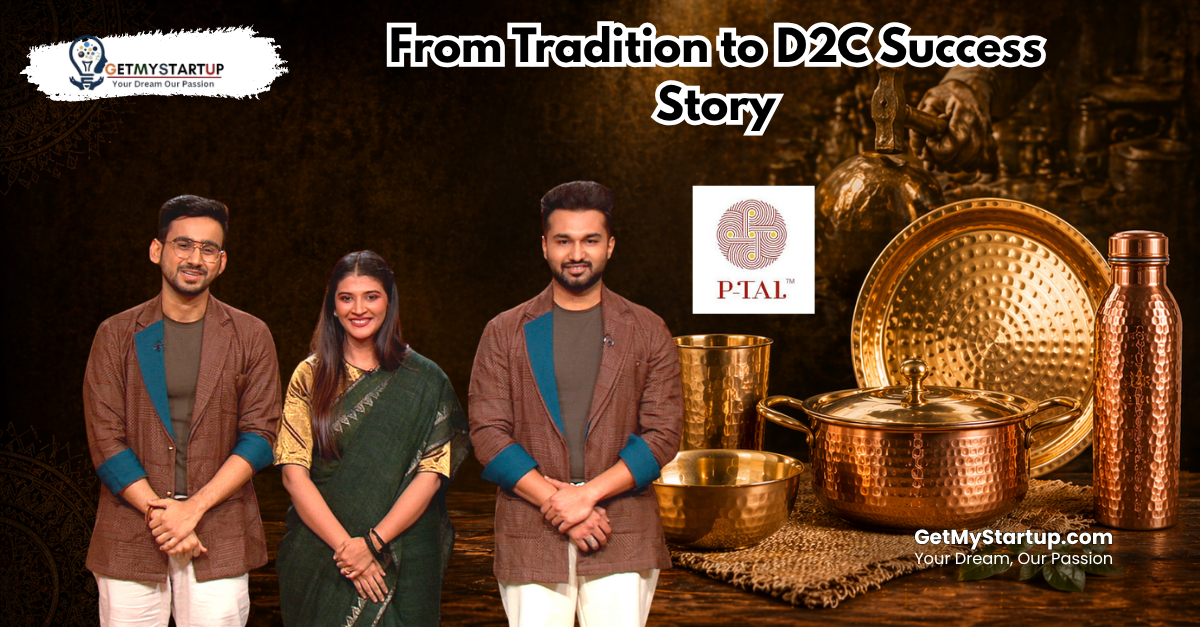
Built on Punjab’s centuries-old Thathera craft, the brand has successfully transformed handcrafted brass and copper utensils into premium, modern lifestyle products. Founded by Kirti Goel, Aditya Agrawal, and Gaurav Garg, P-TAL is not just preserving culture—it’s scaling it.
Founders’ Background
Behind the success of P-TAL are three founders who combined business understanding, design thinking, and purpose-driven vision—Kirti Goel, Aditya Agrawal, and Gaurav Garg.
Kirti Goel
Kirti Goel played a key role in shaping the brand identity and storytelling of P-TAL. With a strong inclination towards design, culture, and sustainability, she helped position the brand as more than just kitchenware—turning it into a lifestyle and heritage-driven brand. Her vision ensured that traditional products appealed to modern consumers.
Aditya Agrawal
Aditya Agrawal brought in the business and operational strategy. From building supply chains to scaling the D2C model, he focused on making the brand commercially viable. His approach helped P-TAL grow from a small initiative into a structured and scalable startup.
Gaurav Garg
Gaurav Garg contributed to execution, growth, and partnerships, ensuring that the brand reached the right audience. His focus on expansion, distribution, and brand presence helped P-TAL strengthen its position in the premium market segment.
What Made Them a Strong Founding Team?
-
A shared vision to revive Indian heritage
-
A balance of creativity + business strategy
-
Strong focus on impact along with profitability
-
Ability to connect artisans with modern consumers.
Together, the founders didn’t just build a company—they built a purpose-driven brand that bridges tradition and modern entrepreneurship.
Startup Overview
• 𝗙𝗼𝘂𝗻𝗱𝗲𝗱: 2016–2017
• 𝗜𝗻𝗱𝘂𝘀𝘁𝗿𝘆: Handcrafted Kitchenware / D2C
• 𝗖𝗼𝗿𝗲 𝗙𝗼𝗰𝘂𝘀: Brass & copper handcrafted products
• 𝗠𝗶𝘀𝘀𝗶𝗼𝗻: Revive Thathera craft & empower artisans
P-TAL works directly with artisans to produce hand-hammered cookware and serveware, combining traditional techniques with modern design.
Key Business Highlights:
• Strong 𝗗𝗶𝗿𝗲𝗰𝘁-𝘁𝗼-𝗖𝗼𝗻𝘀𝘂𝗺𝗲𝗿 (𝗗𝟮𝗖) model
• Presence on e-commerce platforms + own website
• Focus on premium and conscious consumers
• Blend of heritage + health + sustainability positioning
The Problem They Solved
Before P-TAL entered the market, the Thathera craft faced serious challenges:
• Declining demand
• Lack of branding and awareness
• Poor income opportunities for artisans
• Competition from cheap, factory-made products
Even though recognized by UNESCO, the craft lacked commercial scalability.
P-TAL solved this by making tradition relevant, aspirational, and accessible.
What Made P-TAL a Success? (Key Strategies)
1. Premium Positioning Instead of Price War
Instead of competing with low-cost utensils, P-TAL positioned itself as a premium heritage brand—targeting quality-conscious buyers.
2. Storytelling as a Marketing Tool
Every product carries a story:
• Who made it
• How it was crafted
• Why it matters
This emotional connection increased customer trust and brand loyalty.
3. Health and Lifestyle Angle
P-TAL didn’t just sell utensils—they sold benefits:
• Copper & brass linked with traditional wellness
• Eco-friendly and sustainable usage
• Plastic-free living appeal
4. Strong Digital and Brand Presence
• Social media storytelling
• Clean, premium branding
• Visual-first marketing (perfect for modern audiences)
5. Artisan-Centric Model
• Direct collaboration with craftsmen
• Fair wages and consistent work
• Preservation of skills for future generations
P-TAL on Shark Tank India
The turning point came when P-TAL appeared on Shark Tank India Season 2.
What They Showcased:
• A dying craft turned into a scalable business
• Growing customer demand
• Strong brand identity in a niche market
Why Sharks Were Impressed:
• Clear social impact + business balance
• Premium positioning in a cluttered market
• Strong storytelling and vision
Impact of The Show:
• Massive brand visibility
• Increased trust among customers
• Spike in online sales and recognition
• Convincing customers to shift from steel/non-stick to brass & copper
• Educating the market about pricing and value
• Maintaining handcrafted quality at scale
• Building trust in an “old category with new branding
Growth and Impact
Today, P-TAL stands as:
• A successful D2C startup
• A revival story of Indian craftsmanship
• A sustainable and conscious brand
Their Impact:
• Revived employment for Thathera artisans
• Increased demand for traditional products
• Brought Indian heritage into modern homes
Conclusion
The journey of P-TAL teaches a powerful lesson:
• 𝘐𝘯𝘯𝘰𝘷𝘢𝘵𝘪𝘰𝘯 𝘥𝘰𝘦𝘴𝘯’𝘵 𝘢𝘭𝘸𝘢𝘺𝘴 𝘮𝘦𝘢𝘯 𝘤𝘳𝘦𝘢𝘵𝘪𝘯𝘨 𝘴𝘰𝘮𝘦𝘵𝘩𝘪𝘯𝘨 𝘯𝘦𝘸.
• 𝘚𝘰𝘮𝘦𝘵𝘪𝘮𝘦𝘴, 𝘪𝘵 𝘮𝘦𝘢𝘯𝘴 𝘱𝘳𝘦𝘴𝘦𝘯𝘵𝘪𝘯𝘨 𝘴𝘰𝘮𝘦𝘵𝘩𝘪𝘯𝘨 𝘰𝘭𝘥 𝘪𝘯 𝘢 𝘯𝘦𝘸 𝘸𝘢𝘺.
With the vision of Kirti Goel, Aditya Agrawal, and Gaurav Garg, a fading craft has now become a profitable, scalable, and meaningful business.
And that’s what makes P-TAL not just a startup—but a legacy brand in the making.
📌 Published by: GetMyStartup.com
India’s Leading Platform for Startup Stories, Business Insights & Entrepreneur Lessons
